The Collector’s Playbook: How to Authenticate, Date & Value Old Tools
The short answer: identify and date antique tools by reading the maker’s mark (stamped on blades or cast into bodies), interpreting patent dates as minimum-age anchors, and checking construction details — handle material, casting quality, and finish — against known production eras. Maker, rarity, and condition together determine value; age alone does not.
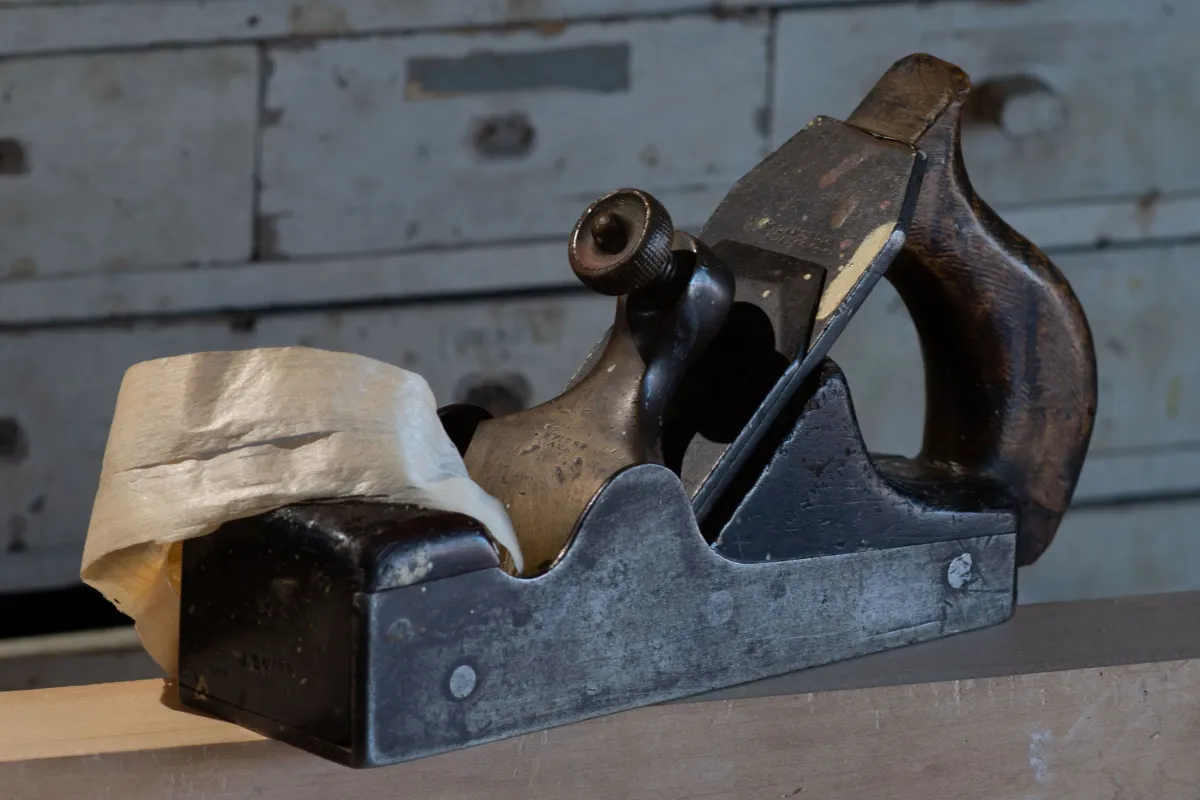
The first time I held a Stanley No. 1 smoothing plane—the smallest and rarest of the Bailey line—my hands were literally shaking. This tiny thing, barely bigger than my palm, was made in 1869. Think about that. This tool was cutting wood before the telephone was invented, and here it was in my hands, still sharp, still functional, still beautiful.
That moment hooked me on vintage tool collecting for life.
After four decades of hunting estate sales, studying maker’s marks, and yes—making expensive authentication mistakes—I’ve watched this hobby transform completely. Tools that sold for $5 at yard sales in the 1980s now fetch hundreds or thousands at auction. But here’s the thing: it’s not really about the money (okay, partially about the money). It’s about preserving manufacturing excellence from an era when companies built things to outlast the craftspeople who used them.
Modern tools are designed for obsolescence. Vintage tools were built for generations. There’s a reason a 100-year-old Disston saw can still out-cut a brand-new $30 big-box-store replacement. The metallurgy, the craftsmanship, the attention to detail—they simply don’t make them like this anymore.
This guide is going to teach you how to identify, authenticate, date, and value antique tools like someone who’s been doing this for forty years. Whether you just inherited your grandfather’s mysterious workshop collection or you’re deliberately building a collection, I’m going to share the knowledge that took me decades (and many expensive mistakes) to learn.
Why Vintage Tools Matter Now
Several trends have created unprecedented interest in vintage tools:
Superior Quality: Many vintage tools were manufactured to standards modern tools rarely match. The metallurgy, precision machining, and design often surpass contemporary equivalents.
Investment Value: Unlike modern tools that depreciate immediately, quality vintage tools often appreciate, making them both functional and financial assets.
Sustainability: Restoring and using vintage tools represents meaningful recycling in our eco-conscious world.
The Craftsmanship Movement: As mass-produced goods dominate, there’s growing appreciation for items made with genuine skill and attention to detail.
I’ve seen tools I purchased for $5 in the 1980s now valued over $500. The market has fundamentally changed.
Tool Manufacturing Timeline: The Golden Ages
Understanding manufacturing periods helps you identify, date, and value pieces accurately.
Pre-Industrial Era (Pre-1850)
Characteristics: Hand-forged by blacksmiths, highly individual with significant variation.
Identification Markers:
- Hammer marks and forge scale visible
- Hand-cut threads on fasteners
- Minimal marking (maker’s stamps rare)
- Hand planing marks on wood components
- Asymmetrical features common
Value Range: $50-$5,000+ depending on maker, condition, and rarity
Look for genuine wear patterns consistent with use rather than artificial aging.
Early Industrial Era (1850-1900)
Characteristics: Transition period combining hand craftsmanship with machine manufacturing. The golden age for collectors.
Identification Markers:
- Patent dates begin appearing (post-1860s)
- Standardized maker’s marks
- Machine-cut threads with hand-fitted components
- Cast iron bodies with hand-ground surfaces
- Nickel plating introduced late period
Value Range: $25-$10,000+ for rare patents and makers
Major Manufacturers:
- Stanley Rule & Level Co. (founded 1857): Revolutionary plane designs
- Disston & Sons (founded 1840): Premium saw manufacturer
- Miller’s Falls (founded 1868): Innovative drill designs
- Sargent & Company (founded 1864): Stanley’s competitor
A Stanley No. 1 plane from this period can fetch $4,000-$8,000 in excellent condition.
Mass Production Era (1900-1945)
Characteristics: Fully industrialized production with consistent quality.
Identification Markers:
- Detailed casting marks and patent information
- Multiple manufacturing locations marked
- Standardized brand-specific features
- Aluminum and advanced steel alloys introduced
- Precision machining throughout
Value Range: $10-$2,000+ depending on rarity
This period offers the best entry point for new collectors. Tools are plentiful, affordable, and often exceptional quality. I recommend beginners start with 1920s-1930s Stanley planes or Disston handsaws ($30-$100), available and performing beautifully when tuned.
Post-War Era (1945-1980)
Characteristics: Peak production but beginning quality decline.
Identification Markers:
- Plastic components introduced
- Simplified designs for efficiency
- Multiple quality tiers
- Foreign manufacturing begins
- Traditional makers acquired by conglomerates
Value Range: $5-$500+ for exceptional pieces
Early post-war tools (1945-1960) maintain quality and are increasingly collectible. The 1950s Stanley Bedrock planes command strong prices ($200-$600) because they maintained pre-war standards.
Major Manufacturer Identification
Knowing who made a tool dramatically affects identification and value.
Stanley Rule & Level Company (1857-Present)
Why They Matter: Stanley defined modern hand tool design. Their planes became the industry standard worldwide.
Sweetheart Logo (1920-1935): The most desirable collector period. Look for the heart-shaped logo with “Stanley” inside—peak quality before cost-cutting began.
Bailey Patent Dates: Reference Justus Bailey’s adjustable plane patents. Multiple dates indicate later production:
- August 31, 1858
- April 11, 1876
- August 6, 1878
- May 2, 1885
Type Studies: Collectors use detailed “type studies” identifying 20+ manufacturing periods based on knob design, lateral adjustment shape, and casting details.
Most Valuable Stanley Tools:
- No. 1 plane (smallest bench plane): $3,000-$8,000
- No. 2C (corrugated bottom): $500-$1,500
- Pre-lateral adjustment planes (pre-1885): $200-$2,000
- Stanley 45 combination plane (complete): $150-$400
Red Flags for Reproductions:
- Logo fonts not matching period examples
- Inconsistent casting quality
- Uniform “aged” appearance rather than actual use
- Wrong screw types for claimed period
The feel of genuine vintage castings becomes instinctive. The metal has density and surface quality reproductions rarely match.
Disston & Sons (1840-1955)
Why They Matter: Henry Disston revolutionized American saw manufacturing, creating the gold standard never surpassed.
Medallion Evolution:
- 1840-1871: Flat medallion with eagle
- 1871-1917: Raised eagle medallion (highly desirable)
- 1917-1940: Keystone medallion
- 1940-1955: Simplified designs
Most Valuable Disston Saws:
- D-8 with eagle medallion (pre-1917): $200-$600
- Early panel saws with elaborate etch: $150-$400
- Backsaws (pre-1900): $100-$300
- Specialty saws: $50-$200
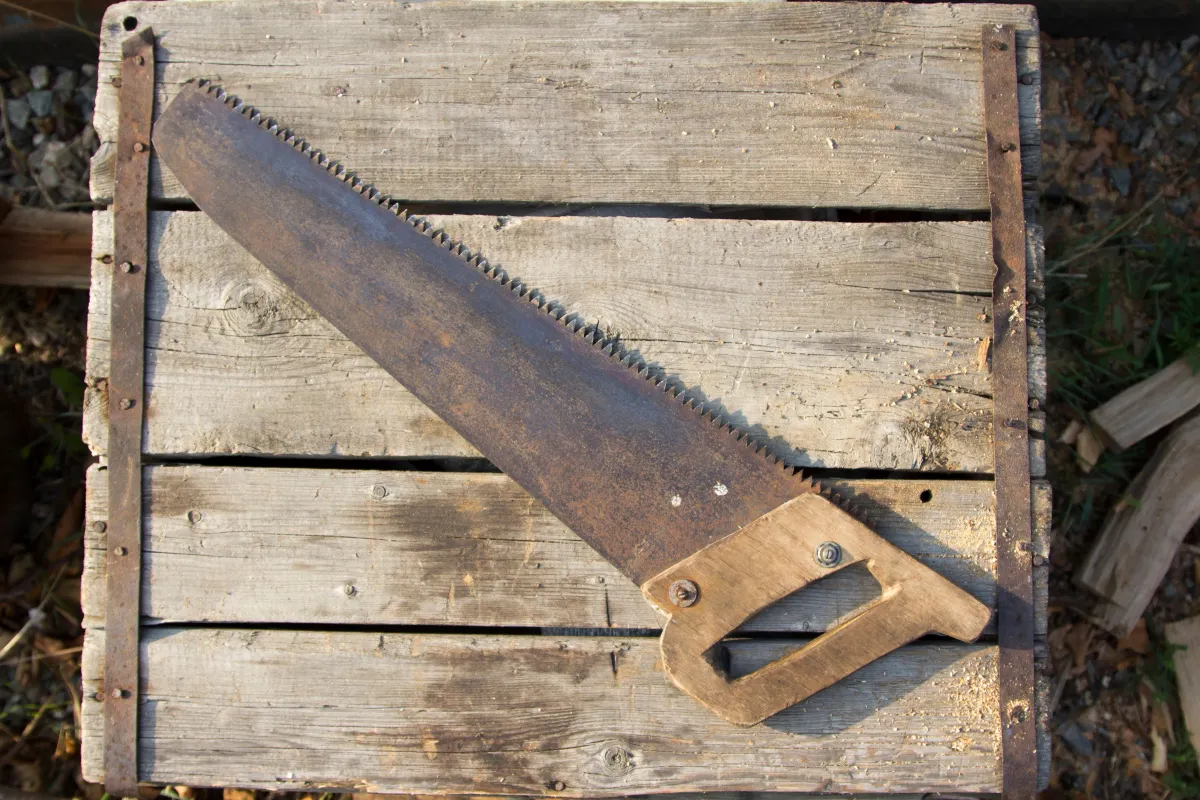
Disston saws respond beautifully to restoration. A rusty $20 flea market find can become a $150 user-grade saw with proper cleaning, sharpening, and handle refinishing.
Millers Falls Company (1868-1982)
Why They Matter: Innovative drill designs and competed with Stanley using different approaches.
Model Numbers:
- No. 2 eggbeater drill (most common)
- No. 900 series planes (Stanley competitors)
- No. 14 breast drill (professional favorite)
Most Valuable Tools:
- No. 900 series planes: $150-$400
- Early breast drills (pre-1900): $75-$200
- Complete bit brace sets: $100-$300
Many woodworkers prefer Millers Falls planes to Stanley models for heftier construction and different adjustment mechanisms. They’re often undervalued.
Sargent & Company (1864-1960s)
Why They Matter: Stanley’s primary competitor, offering comparable quality at lower prices.
“VBM” Logo: “Very Best Made” stamp on premium tools.
Model Numbering: 400-series parallel to Stanley (Sargent 407 = Stanley No. 7).
Most Valuable Tools:
- Premium VBM planes: $100-$400
- Complete sets in original boxes: $300-$800
- Specialty planes: $75-$300
Sargent tools offer excellent value because collectors often overlook them for Stanley. Quality is comparable, but prices run 30-50% lower.
Patent Date Interpretation
Patent dates appear on countless vintage tools but are widely misunderstood.
Patent Dates Don’t Mean Manufacturing Dates
A plane stamped “Pat. April 11, 1876” wasn’t necessarily made in 1876. That references when the patent was granted. Tools bearing that date could be manufactured anytime between 1876 and the 1940s.
How to Actually Date Using Patents:
Multiple Patent Dates: Tools listing several dates were manufactured after the latest listed date.
Patent Pending: Tools marked “Pat. Pending” were made between application and approval, giving a narrow window.
Cross-Reference Features: Use patent dates with other features (logos, materials, design) for accurate dating.
Major Patent Dates
Stanley Hand Planes (Bailey patents):
- August 31, 1858: Original Bailey patent
- April 11, 1876: Lateral adjustment lever
- August 6, 1878: Various improvements
- May 2, 1885: Later refinements
Tools with all four dates were made 1885 or later. Tools with only the first two are earlier and potentially more valuable.
Patent Number Systems
Look up any patent number at the USPTO website to see the exact patent and date.
Decoding by Period:
- Patent No. 1-10,000: 1836-1840s
- Patent No. 100,000: 1870
- Patent No. 1,000,000: 1911
- Patent No. 2,000,000: 1935
Maker’s Mark Encyclopedia
Learning to recognize marks is essential for identifying hidden treasures.
Types of Marks
Stamped Marks: Most common, stamped into metal or wood using dies. Can become faint with wear.
Cast Marks: Integral to casting, appearing as raised or recessed areas. More reliable as they can’t be added later.
Acid Etching: Decorative marks on saws and squares. Beautiful but vulnerable to rust.
Paper Labels: Least durable, rarely surviving intact. Original labels dramatically increase value.
Branded Marks: Hot branding on wooden components like plane handles.
Reading Worn Marks
Techniques that work:
Light Angle Method: Hold tools at various angles under bright light. Shadows reveal stamped impressions invisible under direct lighting.
Pencil Rubbing: Gently rub graphite over the area, then wipe lightly. Graphite settles in depressions, revealing marks.
Digital Photography: Take high-resolution photos with raking light, then enhance contrast digitally.
Avoid:
- Chemicals to “enhance” marks (damages originality)
- Re-stamping or re-etching
- Aggressive cleaning near marks
Rare and Valuable Marks
American Makers:
- Ohio Tool Company: Premium planes, very collectible
- L. Bailey: Pre-Stanley tools (extremely valuable)
- Chapin-Stephens: Beautiful brass-bound levels
British Makers:
- Norris: Infill planes (extremely valuable)
- Mathieson: Premium Edinburgh maker
- Marples: Sheffield tools, excellent chisels
Unmarked Tools: Don’t dismiss these—judge by quality, design, and construction. Some of my finest tools are unmarked.
Hardware Store Brands
Many tools were private-labeled for retailers:
- Simmons Hardware (Keen Kutter)
- Winchester: Highly collectible due to firearms collector crossover
- Shapleigh Hardware (Diamond Edge)
Building Your Identification Skills
Expertise develops through study, practice, and community engagement.
Hands-On Learning
Handle Many Tools: Physical examination is irreplaceable. Attend tool swaps, visit antique shops, examine collections. Notice weight distribution, wear patterns, and construction details photographs can’t capture.
Document Everything: Photograph tools from multiple angles, note dimensions, maintain detailed notes. Creating reference collections builds observational skills.
Compare and Contrast: Place similar tools side by side to understand variations and design evolution.
Study Historical Context
Read Period Catalogs: Historic tool catalogs reveal what was available and how tools were marketed. Many are digitized online.
Study Trade Practices: Understanding different trades explains why specific tools existed. Books on traditional crafts provide essential context.
Engage with Collectors
Join Organizations: Membership in EAIA or MWTCA provides access to journals, research resources, expert contacts, and regular meetings where collectors share knowledge.
Frequently Asked Questions
Q: How can I identify a tool with no markings?
A: Unmarked tools require identification through form, function, and materials. Determine the basic category based on features, compare dimensions to documented examples, and post clear photos in forums where experienced collectors recognize patterns.
Q: Are all old tools valuable?
A: No. Age alone doesn’t determine value. Common tools manufactured in large quantities have modest value. Factors increasing value include renowned makers, rare specialized types, exceptional condition, complete sets, and documented provenance.
Q: How do I determine if a rusty tool is worth restoring?
A: Assess rust depth and the tool’s underlying value. Surface rust responds well to treatment. Deep pitting compromises function. Consider rarity—common tools may not justify extensive restoration. Over-restoration can reduce collector value.
Q: What’s the difference between patent dates and manufacturing dates?
A: Patent dates indicate when designs were patented, not when your tool was made. A tool marked “PAT. 1902” could be manufactured anytime from 1902 to decades later. Research how long companies produced specific models to narrow the date.
Q: Should I clean tools before trying to identify them?
A: Limited gentle cleaning helps reveal marks without damage. Remove loose dirt with soft brushing. Avoid aggressive cleaning—original patina provides dating clues. Once identified, make informed restoration decisions.
Q: Can I use vintage tools or preserve them?
A: Depends on rarity and condition. Common vintage tools in good working condition make excellent users—they were built to last. Rare or collectible tools deserve preservation. Research value before putting uncertain tools to work.
Conclusion: The Journey Ahead (And Why It’s So Addictive)
I’m going to be honest with you: once you start collecting vintage tools, it’s hard to stop. Last weekend I drove two hours to an estate sale because someone mentioned “old tools in the barn.” Know what I found? A mint-condition 1920s Stanley Bedrock #604 smoother. Paid $75 for it. It’s worth $400+. The rush never gets old.
But here’s what I’ve learned over four decades—the real treasure isn’t the money or the rare finds (though both are nice). It’s everything else:
The Connection: Every vintage tool connects you to someone who worked with their hands. When you pick up a well-worn saw handle, polished smooth by decades of use, you’re literally touching history. Someone made a living with that tool. They had a family to feed. That saw paid for someone’s mortgage, put kids through school, built actual houses that are probably still standing. That connection to real people and real work is powerful.
The Community: Tool collectors are some of the most generous, knowledgeable people you’ll ever meet. Post a mystery tool in the right forum, and within hours you’ll have experts weighing in from around the world. The collective knowledge is astounding, and people are genuinely eager to help.
The Detective Work: There’s something satisfying about taking a rusty, unidentified chunk of metal and through research, measurement, and detective work, discovering it’s a rare patternmaker’s tool from 1887. It’s a puzzle that combines history, metallurgy, and industrial archaeology.
Your Action Plan for Starting:
This Month: Visit three estate sales or antique shops. Don’t buy anything—just look, handle tools, ask questions, and start training your eye.
Within 3 Months: Make your first informed purchase. Start with something common—a Stanley #4 or #5 plane (under $50), or a Disston handsaw. Learn to clean, restore, and use it properly.
Within 6 Months: Join a tool collector organization (EAIA or MWTCA). Attend one meet or show. You’ll learn more in one weekend than months of solo research.
Within a Year: Build your reference library. Start with 2-3 good books on your area of interest. Subscribe to relevant forums and online communities.
Mistakes to Avoid (I’ve Made Them All):
- Don’t clean aggressively before identifying—you might destroy dating evidence
- Don’t overpay for your first pieces—there will always be more tools
- Don’t buy reproductions thinking they’re originals (examine those maker’s marks carefully!)
- Don’t store tools in damp conditions—surface rust is one thing, deep pitting is forever
- Don’t skip learning about values before buying or selling
The Real Reward: After forty years, I still get excited opening a toolbox at an estate sale. I still learn new things. I still find surprises. And yes, I still make mistakes (paid too much for a “rare” plane last month that turned out to be a common variant).
But every tool has a story. Every maker’s mark is a breadcrumb trail into industrial history. Every well-made piece is a monument to craftsmanship that prioritized quality over profit.
Welcome to vintage tool collecting. Trust me—that mysterious box of tools in your grandfather’s barn is absolutely worth investigating. You might be surprised what treasures you’re sitting on.