The Right Outdoor Tool for Every Season (and How to Store Them)
The short answer: outdoor tools follow the seasons — mower, trimmer, and pruners for spring; irrigation and edging gear through summer; rakes, blowers, and aerators for fall; snow removal for winter. A homeowner who owns the right tools for each season saves the $1,800–$2,400 most people pay annually for lawn service.
My first spring in a house with a real yard humbled me fast. The lawn outgrew my apartment-sized push mower within weeks, last fall’s leaves were still everywhere, and I had zero clue what tools I actually needed.
That first year, I spent over $2,200 on lawn service. The second year, I got smart.
The numbers tell the story: the average homeowner spends $1,800–2,400 annually paying someone else to do work that proper tools and basic knowledge make totally manageable. I’m not saying everyone should maintain their own property (some people genuinely prefer to pay for service), but if you’re reading this, you’re probably someone who’d rather invest in tools and capability than ongoing service contracts.
After three decades maintaining everything from suburban lots to multi-acre properties through hundreds of seasonal cycles, I’ve learned exactly what tools you actually need for each season, what’s worth buying, what’s worth renting, and how to keep everything running reliably for decades.
This isn’t a guide to building a landscape maintenance company. This is strategic homeowner capability—having the right tools for each season without waste or clutter.
Understanding the Seasonal Cycle
Your climate dramatically affects tool needs. Northern climates (USDA Zones 3-5) require snow removal equipment and have shorter growing seasons. Temperate zones (6-8) experience all four distinct seasons. Southern climates (9-11) need year-round maintenance tools but no snow equipment.
Investment by Property Size:
- Small (under 1/4 acre): $1,500-3,000 for essentials
- Medium (1/4 to 1 acre): $3,000-6,000 for essentials
- Large (over 1 acre): $6,000-12,000 for essentials
These investments typically pay for themselves within 1-2 years compared to hiring services.
Spring Tools: Revival and Renewal
Spring demands tools for cleanup, soil preparation, and beginning the growing season.
Essential Hand Tools
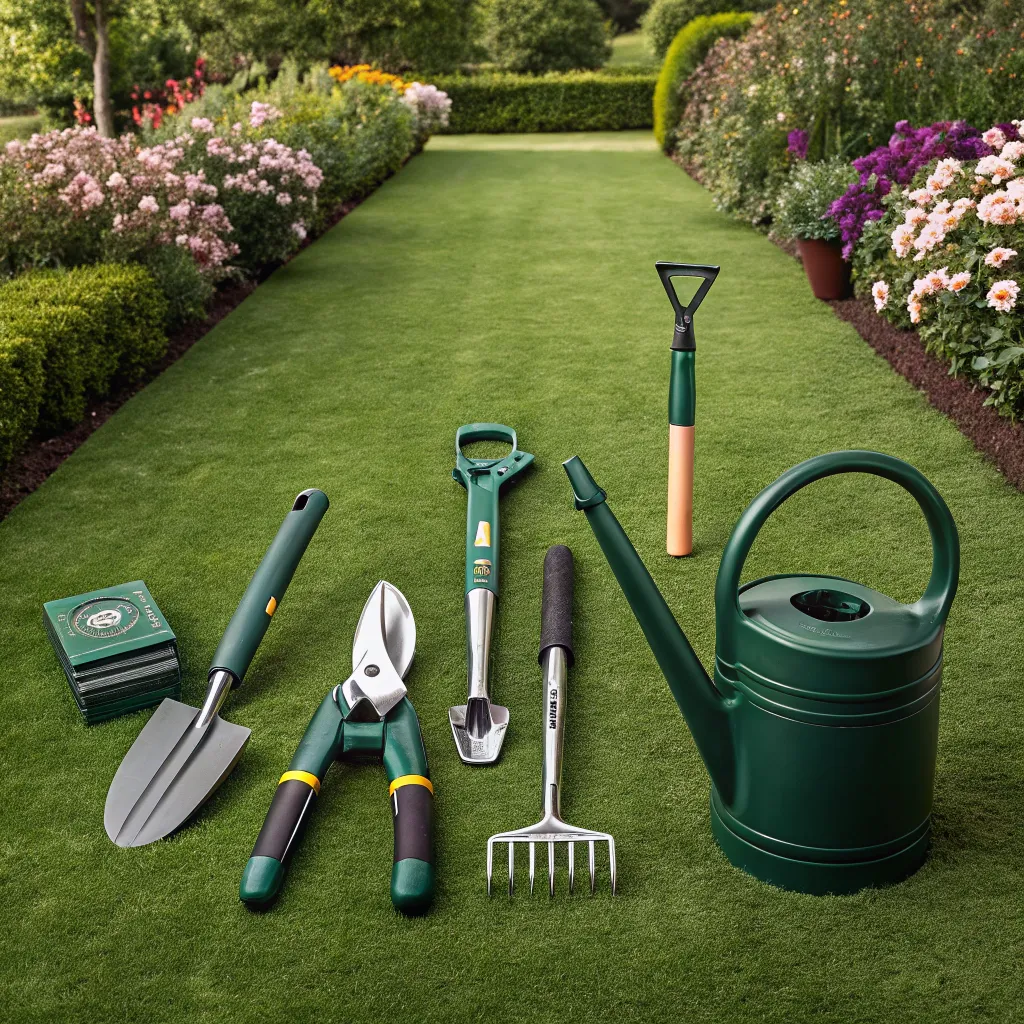
Rakes: You need three types. Leaf rakes gather debris, thatch rakes remove dead grass for lawn health, and garden rakes prepare soil for planting. Each serves a distinct purpose—attempting to use one for all tasks damages both tool and results.
Pruning Tools: Hand pruners (Felco F-2 at $50-70 are worth the investment), loppers for branches up to 2 inches, and a pruning saw for larger work. Spring pruning before leaf-out allows better visibility and promotes healthy growth.
Digging Tools: A quality digging spade (Fiskars Long Handle, $40-60), garden fork for turning soil, and a forged steel trowel that’ll last decades. I’ve broken dozens of cheap trowels over the years. After switching to quality forged steel, I haven’t replaced a tool in 15 years.
Power Equipment
String Trimmer: Choose between gas (Echo SRM-225, $200-280) or battery-powered (Ego Power+ ST1623T, $200-280). I switched to battery five years ago and haven’t looked back. The convenience—no mixing fuel, instant start, quieter operation—overwhelms any minor power difference for most homeowner applications.
Lawn Aerator: For small lawns, use a manual plug aerator ($40-70). For medium lawns, consider a powered dethatcher/aerator ($200-300). I rent a professional core aerator annually ($70-100/day) rather than buying a homeowner model—the superior results justify rental cost with no storage burden.
Spreaders: A broadcast spreader (Scotts Elite 18-inch, $120-160) handles seed and fertilizer for most properties. Add a 2-gallon pump sprayer ($25-40) for liquid applications.
Summer Tools: Continuous Maintenance
Summer means weekly mowing, trimming, and watering to manage aggressive growth.
Mowing Equipment
Push Mowers (up to 1/4 acre):
- Gas: Honda HRX217VKA ($550-700)—legendary reliability that lasts 20+ years
- Battery: Ego Power+ LM2156SP ($600-800)—65-minute runtime, excellent power
The Battery vs. Gas Decision: Battery-powered has surpassed gas for properties under 1/2 acre. No maintenance, instant start, quieter, cleaner. Choose gas for unlimited runtime needs or properties over 1 acre.
Riding Mowers (1/2 to 2 acres): Cub Cadet XT1 LT42 ($1,800-2,400) offers excellent value with a 42-inch deck and hydrostatic transmission.
Zero-Turn Mowers (1+ acres): Toro TimeCutter 42-inch ($3,000-3,800) cuts mowing time by 50% compared to riding mowers. I mow 1.5 acres in 75 minutes versus 2.5 hours with my previous riding mower.
Watering Systems
A quality garden hose (Flexzilla 5/8-inch x 50-feet, $40-60) with proper sprinklers forms your watering foundation. Oscillating sprinklers work for rectangular areas, impulse sprinklers cover circular patterns, and soaker hoses save 50% water in garden beds.
Irrigation Timer: An Orbit single-outlet timer ($35-50) automates watering—the single best investment for lawn and garden health. Consistent watering produces dramatically better results than irregular hand watering.
Fall Tools: Cleanup and Preparation
Fall revolves around leaf management and lawn renovation before winter.
Leaf Management
Leaf Blower: A powerful blower (Ego Power+ LB6504, $200-280 with battery) transforms hours of raking into minutes. This is your most important fall tool.
Mulching Strategy: Run over leaves weekly with your mulching mower before they mat down. Multiple passes chop them finely, fertilizing your lawn with free nutrients. This approach has eliminated leaf collection on my property completely.
Collection Tools: Heavy-duty tarps (Gardzen 2-pack, $25-40) with handles make moving leaves efficient. Paper leaf bags ($20-30 for 25) work for municipal pickup requirements.
Lawn Renovation
Fall is ideal for core aeration and overseeding. Soil is typically moister, grass recovers before winter, and cool-season establishment conditions are perfect. Rent a professional overseeder ($80-120/day) for seriously degraded lawns—the transformation is dramatic.
Soil Testing: A mail-in test kit (MySoil, $30-40) provides professional analysis with specific recommendations. Fall amendments have winter to integrate before spring growth.
Essential Support Tools: A contractor-grade wheelbarrow (Gorilla Carts GOR6PS, $100-140) handles compost, debris, and materials year-round. A tumbling composter (FCMP IM4000, $120-160) recycles yard waste into free soil amendment.
Winter Tools: Snow and Dormant Season
Requirements vary dramatically by climate. Northern regions need substantial snow equipment; southern climates need minimal winter-specific tools.
Snow Removal (Northern Climates)
Snow Shovels: Own both a 24-inch pusher shovel ($35-50) for light snow and a steel scoop shovel ($35-50) for lifting and throwing. Add a roof rake ($50-80) if you experience heavy snow—preventing ice dams saves thousands in damage.
Snow Blower Decision Matrix:
- Under 20 feet driveway: Shovel adequate
- 20-50 feet: Single-stage blower (Toro Power Clear 721 E, $500-700)
- 50-100 feet: Two-stage blower (Ariens Deluxe 28 SHO, $1,200-1,600)
- Over 100 feet: Three-stage or professional plow service
I have a 150-foot driveway. My two-stage snow blower clears it in 30 minutes versus 2 hours shoveling—the physical preservation alone justifies the investment.
Winter Planning
Winter is planning season. Research plants, order seeds, and prepare for spring. Indoor seed starting requires grow lights ($130-180), seed trays with domes ($15-30), and a heat mat ($20-40). This planning time makes spring dramatically more efficient.
Year-Round Essentials
Certain tools transcend seasonal boundaries.
Must-Have Hand Tools
Quality Gloves: Heavy-duty work gloves (Ironclad, $20-30) for rough work and flexible pruning gloves ($15-30) for detailed tasks. I go through 4-6 pairs annually—buy quality that lasts months.
Garden Kneeler: A flip kneeler/seat (Ohuhu, $40-60) with handles for standing assistance saves knees and back. After 50, this became essential for ground-level work.
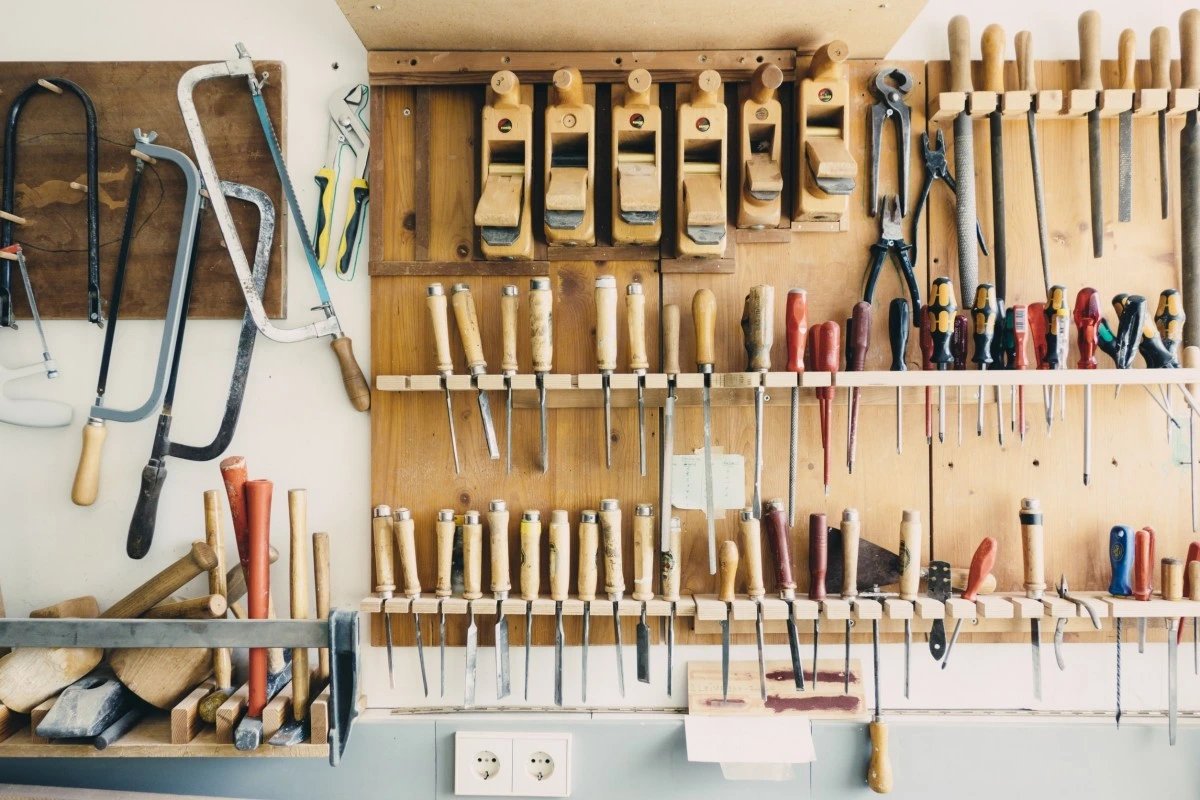
Maintenance Station: Dedicate shed or garage space for tool maintenance with a workbench, sharpening equipment, and cleaning supplies. Proper maintenance extends tool life from years to decades.
Safety Equipment
Never skimp on safety. Impact-rated safety glasses, hearing protection (foam earplugs for mowing, over-ear muffs for extended power tool use), and sun protection are essential. After three skin cancer removals, I take sun protection seriously—wide-brimmed hat, SPF 30+ sunscreen, and long sleeves for extended outdoor work.
Battery Platform Strategy
One Battery System for All Tools: Choose a platform early and commit completely. Major options include Ego Power+ 56V (my choice for outdoor tools), Milwaukee M18, DeWalt 20V, and Ryobi 40V.
My Ego platform powers push mower, string trimmer, leaf blower, hedge trimmer, chainsaw, edger, and snow blower. Six 5.0Ah batteries run everything. I charge overnight, always have charged batteries ready. The system has been flawless for seven years with battery interchangeability, reduced inventory, and simplified charging.
Tool Maintenance Schedule
Proper maintenance extends tool life from years to decades.
Spring Start-Up:
- Fresh fuel or fully charge batteries
- Change oil (gas equipment)
- Sharpen mower blades
- Clean air filters
- Test everything before busy season
Summer Weekly:
- Clean grass from mower deck
- Check oil levels
- Sharpen mower blades every 8-10 hours
Fall Season-End:
- Thorough cleaning
- Sharpen all blades
- Touch up paint (rust prevention)
- Drain fuel completely from gas equipment
I drain all fuel before winter storage. Fresh fuel in spring eliminates 90% of starting problems.
Winter Off-Season:
- Store batteries at 30-50% charge in moderate temperatures
- Monthly storage checks
- Sharpen and repair tools
- Pre-season snow equipment service
Smart Purchasing Decisions
Invest in Quality for:
- Tools used weekly (mower, trimmer, pruners)
- Safety equipment
- Primary power tools
Buy Budget Versions for:
- Specialty tools used occasionally
- Secondary or backup tools
Rent Rather Than Buy:
- Core aerators (annual use)
- Overseeders (occasional renovation)
- Expensive specialty equipment
Buy Used:
- Hand tools at estate sales (often 1/10th retail price)
- Sheds and storage buildings
Avoid Used:
- Snow blowers (critical reliability)
- Battery-powered tools (battery degradation)
Conclusion: Taking Control of Your Property (And Your Budget)
Let me share the real economics of my outdoor tool journey. That first year, paying for lawn service: $2,200. Second year, after investing $3,500 in tools: $150 (blade sharpening and a bag of fertilizer). Every year since? Maybe $200 annually in maintenance, fuel, and consumables.
The tools paid for themselves in less than two years. And it’s now been 15 years. Do that math.
But It’s Not Just About Money: Here’s what surprised me about taking over my own property maintenance—I actually enjoy it. There’s something genuinely satisfying about mowing straight lines, seeing a clean edge along the driveway, or watching snow disappear from the path you just cleared. Your property stops being something that just happens to you and becomes something you actively shape and care for.
The Strategic Build-Out: You don’t need everything at once. Here’s the realistic timeline:
- Year 1: Core tools for your climate’s primary seasons. Budget $1,500-3,000 depending on property size.
- Year 2: Fill seasonal gaps you discovered through Year 1 experience. Budget $1,000-2,000.
- Year 3+: Upgrades and specialty tools. Budget $500-1,000 annually.
The Battery Platform Decision Matters Here Too: I can’t stress this enough—if you’re buying cordless tools for indoor projects (drill, impact driver) and outdoor tools (mower, trimmer), get them on the same platform if possible. My Ego batteries power my indoor drill, outdoor mower, trimmer, leaf blower, and chainsaw. One charging system. Multiple tools. It’s beautifully simple.
Maintenance Is Non-Negotiable: Here’s where people screw up—they buy good tools, then neglect them. I see it constantly. Your tools will last decades if you maintain them properly. Neglect them, and even expensive equipment fails within a few years. Fifteen minutes of maintenance per week prevents hundreds in premature replacement.
What Success Looks Like: After you’ve been doing this a few years, here’s what happens:
- Spring hits: You’re not scrambling to schedule service or repair broken equipment. Everything’s ready because you prepped it in late winter.
- Summer maintenance: Becomes routine. Mowing, trimming, maintaining becomes almost meditative instead of stressful.
- Fall cleanup: You have the right tools and know exactly how to tackle leaves efficiently.
- Winter arrives: If you’re in snow country, you’re not panicking during the first snowstorm because your snow blower is serviced and ready.
The Rental vs. Buy Decision: Some things are worth renting. I rent a professional core aerator annually ($80) rather than buying a homeowner model ($300+). The professional machine works better, takes less storage space, and I don’t have to maintain it. Not everything needs to be owned.
Start Where You Are: Don’t let the total investment scare you. Start with the essentials for your current season. Build strategically. Learn what you actually use versus what marketing says you need. Adjust based on experience.
There’s genuine pride in maintaining your own property. The property value increase is real. The money saved is substantial. But more than anything, you gain capability, self-reliance, and that deep satisfaction that comes from taking care of what’s yours.
Now get out there and make your yard look amazing. You’ve got this.
About the Author: A property owner and outdoor maintenance enthusiast for over 30 years, our expert has maintained properties ranging from suburban lots to multi-acre estates through countless seasonal cycles, learning what actually works through extensive trial, error, and evolution.